

Is 3D Printed Decor Worth the Price?
Table of Contents
- Understanding the Real Cost of 3D Printed Decor
- 3D-Printed Decor vs Mass-Produced Decor
- 3D-Printed Decor Quality and Durability
- 3D-Printed Home Decor Ideas and Practical Applications
- When 3D Printed Decor Pays for Itself
- Quality Indicators: How to Spot Good 3D Printed Decor
- Frequently Asked Questions
Last Updated: October 11, 2026
Understanding the Real Cost of 3D Printed Decor
Is 3D printed decor worth the price? That's the question most people ask before they order their first custom sign or themed bedroom accessory. The answer depends entirely on what you're comparing it against and what you actually value.

At Wiggle N Click Prints, we've helped thousands of customers work through this decision. What we've learned is that the real cost of 3D printed decor isn't just the upfront purchase price, it's the total investment when you factor in printer costs, materials, electricity, and your time. For many people, buying finished items makes far more sense than investing in their own printer. For others, especially those who want multiple custom pieces or unique designs, 3D printed decor becomes genuinely worthwhile.
Let's break down what you're actually paying for and whether it justifies the expense.
Upfront printer costs versus purchasing finished items
If you're thinking about buying a 3D printer to make your own decor, you'll need to understand the entry-level investment. Consumer 3D printers range widely in price, but a basic machine capable of producing decent quality prints typically costs between $200 and $500 for beginner-friendly models.
Here's the practical reality: most people who buy a printer for home decor projects use it sporadically. You'll print a nameplate sign for your child's bedroom, maybe a few themed accessories, and then the printer sits idle.
Buying finished 3D printed decor from a specialist like Wiggle N Click Prints sidesteps this entirely. You pay only for what you want, when you want it.
Material, electricity and maintenance expenses
Filament, the plastic material that feeds into a 3D printer, costs money every time you print something. Quality PLA filament (the most common type for home decor) typically costs between $15 and $25 per kilogram.
Electricity consumption is modest but real. A 3D printer running for 8-12 hours to print a sign uses roughly 1-2 kWh of energy. At typical electricity rates, that's a few cents per print.
Maintenance is where hidden costs emerge. Nozzles wear out and need replacing ($10-$20). Build plates need regular cleaning or eventual replacement. Failed prints waste filament and electricity.
When you buy finished 3D printed decor, these costs are already factored into the price you pay. You're not managing supplies, replacing parts, or dealing with print failures. The maker handles all of that.
3D-Printed Decor vs Mass-Produced Decor
The real value question isn't whether 3D printed decor is cheaper than a printer, it's whether it's worth more than mass-produced alternatives you'd find in homeware shops or online marketplaces.
Price comparison and total cost per item
A mass-produced plastic nameplate sign from a large retailer might cost $8-$15. It's cheaper than a custom 3D printed sign at first glance.
A custom 3D printed sign from Wiggle N Click Prints costs $25.00 for most themed designs. That's roughly double the price of a generic alternative. What changes for that extra cost?
You get your child's actual name on the sign. You get a design that matches their interests, Minecraft, Sesame Street, Spider-Man, or Cars. You get something completely unique that no one else in their school will own.
The total cost of a finished piece also includes the design work. Someone has to create the 3D file, test it for print quality, ensure it assembles properly, and handle the printing and finishing. That labour is embedded in the price.
Design flexibility and customisation value
This is where 3D printed decor genuinely wins. You can specify exactly what you want: your child's name, a specific number, a particular colour scheme, or a custom theme. Mass-produced decor offers none of this flexibility. You pick from what exists.
Customisation has real value, especially for gifts and items that will live in a child's bedroom for years. A sign with your child's actual name feels personal in a way a generic sign never will. It's not just decoration, it's something that says "this space belongs to you."
For collectors, enthusiasts, and gift-givers, that customisation premium is worth paying. A personalised Minecraft sign for a gaming-obsessed teenager, a custom Sesame Street sign for a nursery, or a themed accessory for a pop culture fan, these items carry emotional weight that off-the-shelf decor doesn't.

3D-Printed Decor Quality and Durability
The biggest concern we hear from customers is whether 3D printed decor will actually hold up. Will the print quality fade? Will the plastic become brittle? Will it look cheap after a few months?
Longevity of PLA plastic and finish quality
PLA (polylactic acid) is the standard material for consumer 3D printing, and it's durable enough for indoor decor. It won't degrade rapidly or become brittle under normal household conditions.
The finish quality depends on the printer and the post-processing work. A well-maintained 3D printer produces smooth, vibrant prints. Minor layer lines (the visible ridges from how 3D printing works) are normal and actually make each piece unique, they're not defects.
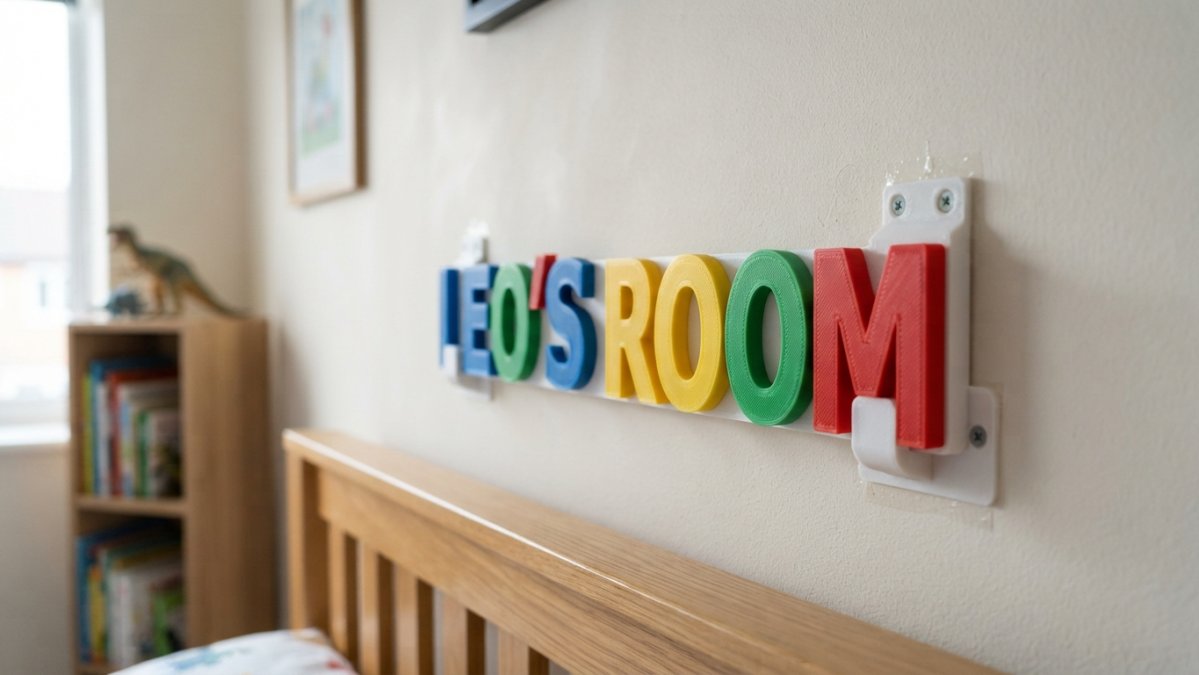
At Wiggle N Click Prints, every item is made from quality PLA filament and finished with care. The personalised signs maintain their colour and structural integrity through normal use.
Common durability concerns and how to address them
The main risk to 3D printed decor is physical impact. If a sign gets knocked over or dropped, it can crack or break, the same as any plastic item. This isn't a weakness of 3D printing; it's the nature of the material.
Discolouration can occur if 3D printed items are exposed to direct sunlight for extended periods. UV light fades most plastics over time. Placing decor in shaded areas or away from windows preserves colour vibrancy.
Dust accumulation is normal and easily managed with a soft cloth. Regular light cleaning keeps 3D printed decor looking fresh.
The bottom line: 3D printed decor is durable for indoor use when placed in appropriate locations. It's not indestructible, but neither is mass-produced plastic decor.
Custom 3D Printed Sesame Street-Style Light Pole And Sign – Personalized Name →
3D-Printed Home Decor Ideas and Practical Applications
Understanding whether 3D printed decor is worth the price becomes clearer when you see real applications that actually deliver value.
Personalised signs and themed bedroom accessories
Personalised signs are the most popular use case for 3D printed decor, and they're genuinely worthwhile. A child's name on a bedroom door sign, a gaming room sign with custom text, or a themed accessory that matches their interests, these items are impossible to find mass-produced.
The Custom 3D Printed Minecraft Inspired Sign at $25.00 is a perfect example. A teenager obsessed with Minecraft gets a sign that reflects their passion, with their own text and design. It's not a generic "Gaming Room" sign that could belong to anyone. It's theirs.
Similarly, the Personalised Sesame Street Inspired Sign brings nostalgia and personalisation together. Parents decorating a nursery or playroom can create something that feels handmade and special, even though it's professionally 3D printed.

Useful versus purely decorative items
Not all 3D printed decor is purely aesthetic. Some pieces serve practical purposes. A custom nameplate on a door, a themed organiser, or a personalised keychain, these items combine function with design.
The distinction matters for value. A purely decorative vase or figurine must justify its cost through beauty and uniqueness alone. A personalised sign that actually identifies a child's room or a themed accessory that gets regular use delivers both aesthetic and practical value.
This is why custom signs perform so well. They're not just decoration, they serve the purpose of identifying a space or expressing identity. That dual value makes the price feel more justified.
When 3D Printed Decor Pays for Itself
For most people, buying individual 3D printed decor items doesn't "pay for itself" in a financial sense, you're not saving money compared to mass-produced alternatives. But it does pay for itself in other ways.
Break-even analysis for custom versus replacement parts
If you're buying 3D printed decor to replace something broken or to customise something you already own, the economics shift. A custom nameplate sign that replaces a damaged or generic alternative pays for itself immediately by giving you exactly what you want.
For gift-givers, a personalised item that gets used and treasured for years delivers value that generic gifts don't. The recipient keeps it, displays it, and remembers who gave it to them. That emotional value is real, even if it's not quantifiable in dollars.
For collectors building themed collections, buying multiple custom pieces from a specialist like Wiggle N Click Prints is more cost-effective than trying to source equivalent items from multiple retailers. You get consistent quality, design coherence, and the convenience of ordering from one place.
Long-term value for collectors and gift-givers
The true value of 3D printed decor emerges over time. A personalised sign in a child's bedroom becomes a keepsake. A custom-themed accessory for a pop culture enthusiast becomes part of their collection. These items accumulate meaning and emotional significance that mass-produced decor never does.
For gift-givers, this is powerful. You're not just buying something, you're creating a memory. A personalised Minecraft sign for a gaming-obsessed teenager, a custom Sesame Street piece for a young fan, a themed accessory that perfectly matches someone's interests, these gifts stand out because they're personal and unique.
That long-term value justifies the upfront cost. You're paying for customisation, uniqueness, and the satisfaction of giving something truly tailored to the recipient.
Quality Indicators: How to Spot Good 3D Printed Decor
Not all 3D printed decor is created equal. Here's how to identify items that will actually be worth your money.
Look for smooth, consistent print quality without obvious defects or rough patches.
Check that customisation options are genuinely flexible. Can you specify your own text, choose colours, or request specific themes?
Verify that the maker uses quality materials. PLA plastic is the standard for good reason, it's durable, vibrant, and suitable for indoor decor.
Look for evidence of post-processing and finishing work. Are edges smooth? Are colours consistent? Does the item look professionally made, or hastily assembled?
Finally, check shipping and handling practices. Quality makers pack items carefully to prevent damage in transit.
Is 3D printed decor worth the price?
Frequently Asked Questions
Is 3D printed decor actually durable enough for everyday use?
Yes, when made from quality materials like PLA plastic. 3D-printed decor items hold up well in indoor environments, especially away from direct sunlight and high heat. Most users report their printed signs and accessories lasting years without degradation. Minor surface imperfections from the printing process don't affect durability, they're normal and don't indicate a defect.
How does the price of 3D-printed decor compare to buying mass-produced alternatives?
3D-printed decor typically costs more upfront than generic mass-produced items, but offers significant advantages. Custom personalised signs from Wiggle N Click Prints start at $7.00 for themed designs, while mass-produced equivalents often lack customisation. The real value emerges when you factor in design flexibility, personalisation options, and the uniqueness you're paying for, something off-the-shelf decor cannot provide.
What makes 3D-printed decor worth the investment for gifts?
3D-printed decor becomes worthwhile for gifts because it offers genuine personalisation at an affordable price point. A customised Minecraft sign or Sesame Street nameplate creates a memorable, one-of-a-kind gift that mass-produced items simply cannot match. Recipients appreciate the thought and effort, and the durability means the gift lasts for years rather than becoming clutter.
Can I customise 3D-printed decor to match my specific design ideas?
Yes. Custom 3D-printed items allow you to add your own text, names, numbers, and colour preferences. You can personalise signs with 1-3 lines of custom text, choose themed designs like Minecraft or Spider-Man, and request specific sizes or colours by contacting the maker. This level of customisation is rarely available in mass-produced decor and justifies the higher price.